Airports are designed to keep you moving, not to keep you connected. One minute you are racing through immigration, the next you are stranded between gates with a dead Wi‑Fi zone and an app that refuses to pull your boarding pass. That is exactly where temporary eSIM plan trials shine. A two to seven day mobile data trial package can bridge those awkward gaps: a four hour transit in Doha, a red‑eye layover in Newark, a half‑day meeting at Heathrow on the way to Frankfurt. You scan a QR code, download an eSIM, and start moving again without hunting for physical SIM kiosks or messing with your primary number.
Over the past few years I have tested short‑term eSIM plan options in more than twenty airports, from Singapore to San Francisco. The lesson is consistent. If you plan ahead, a trial eSIM for travellers can be the cheapest, least stressful way to avoid roaming charges during a layover. The catch is knowing which offers are truly free, which are effectively $1 marketing hooks, and how to avoid throttling that turns maps into molasses.
What “trial” actually means in eSIM land
Trial is a slippery word. In practice, eSIM trial plan offers fall into three buckets.
Some providers let you try eSIM for free with a tiny data allowance, usually 50 to 200 MB, valid for 1 to 3 days. It is enough to message your driver, pull transit directions, and sync an email inbox. These show up under labels like eSIM free trial, free eSIM activation trial, or mobile eSIM trial offer.

Others sell a symbolic paid test, often branded as an eSIM $0.60 trial or a $1 sampler. The amount is small, the experience is real, and the allowance is slightly bigger, https://soulfultravelguy.com/article/esim-free-trial typically 300 to 500 MB. For a layover, that extra cushion can be worth the coin.

Finally, some networks give you a country‑specific free slice, such as eSIM free trial USA or free eSIM trial UK, intended to showcase their domestic coverage. These are limited to one SIM per device and may require account verification. If you will be transiting through New York or London, they can be perfect.
The key is reading the fine print. Any global eSIM trial that looks generous usually restricts speed after a cap or blocks certain traffic like tethering. You want enough high‑speed data to complete your airport tasks, then you can let it throttle after you board.
Why layovers are the sweet spot
A temporary eSIM plan excels when your needs are short and specific. During a layover you want to:
- refresh travel apps that store boarding passes and lounge invitations message family or a rideshare driver load offline maps or transit directions check bank alerts and one‑time passcodes for bookings
Airport Wi‑Fi often fails at those exact moments. Captive portals time out, SMS verification never arrives, and VPNs randomly block. A prepaid eSIM trial bypasses all of that with cellular data that is live the moment you scan. It is a cheap data roaming alternative without touching your home line or physical SIM tray.
For business travellers the advantage is even sharper. If a meeting lands in the middle of a connection, a short‑term eSIM plan lets you run video calls with far less friction than public Wi‑Fi. I have managed a 30 minute client call over a trial plan in Hong Kong, holding around 5 to 10 Mbps down. Not perfect, but enough to keep a project moving.
How much data you actually need for a layover
Data calculators on websites assume streaming and heavy browsing. A layover is different. Here is a simple rule of thumb drawn from my logs.
Pulling a boarding pass and updating two or three apps uses around 10 to 20 MB. A map download for a city center is 50 to 100 MB if you forgot to do it earlier. Messaging with a few images adds 5 to 15 MB. A short rideshare search with map tiles can be 5 to 10 MB. If you keep background sync under control, 150 to 300 MB covers most layovers cleanly.
Streaming video is a luxury in this context. Even “low” quality video can chew 200 to 300 MB for 10 minutes. If your trial is capped at 200 MB, do not tap the play button. Music streaming in compressed formats is gentler, about 40 to 70 MB per hour, but airport PA announcements will interrupt it anyway.
The activation flow that avoids headaches
Most travel eSIM for tourists products follow a similar activation path. The best time to install is the night before you fly, while you are on reliable Wi‑Fi. That way the eSIM profile is ready as soon as you land, even if the airport’s network is sluggish.
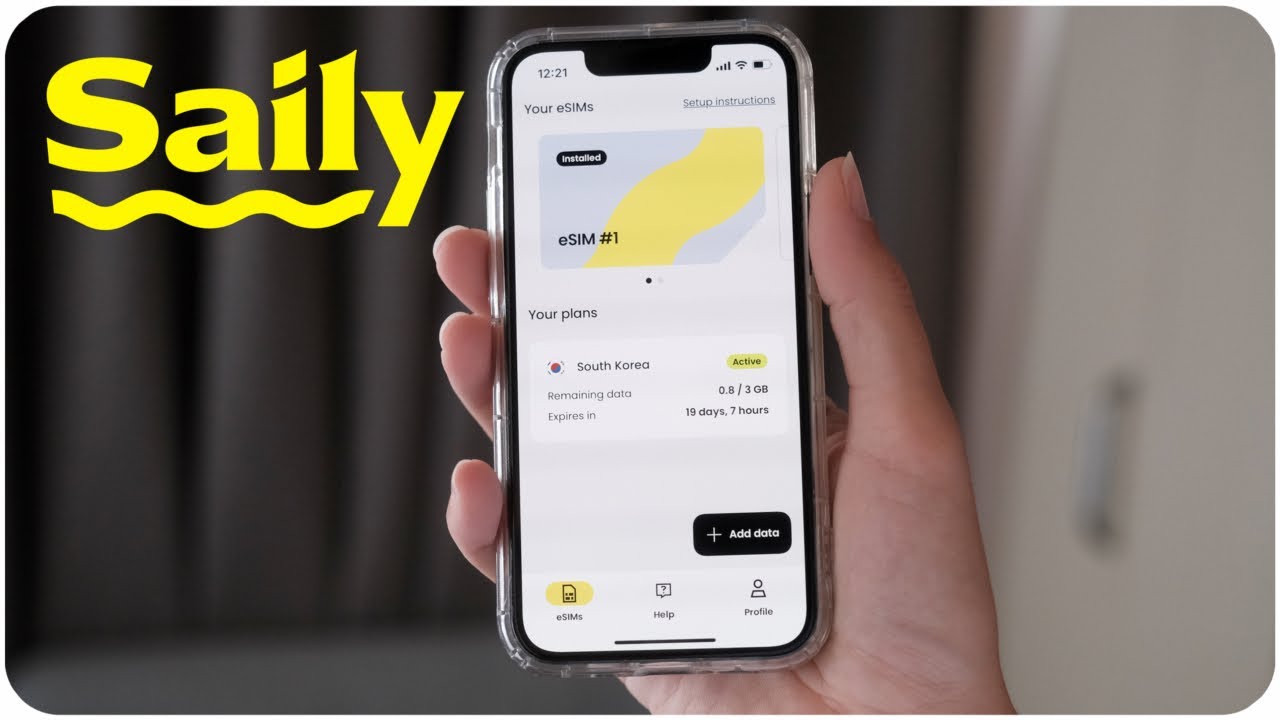
- Create an account with your chosen provider, verify email or phone, and add a payment method only if required for the trial. Choose the region for your stopover, such as USA, UK, EU, or a global eSIM trial that covers multiple countries on your route. Scan the QR code to add the digital SIM card to your phone, label it with the destination name, and disable “Allow Cellular Data Switching” on iPhone to prevent accidental roaming on your primary line. Set the trial eSIM as the data line. Keep your primary number enabled for calls and texts if you need two‑factor codes. On landing, toggle the eSIM on, turn off data roaming on your physical SIM, and let the device register on the local network. If it stalls, a quick airplane mode cycle fixes most hiccups.
This is the one list that deserves to exist. If you follow it, you eliminate 90 percent of setup surprises.
Picking the right trial for your route
Not all trials are created equal. Your choice depends on the airport, your phone, and how sensitive you are to reliability versus price.
If you are transiting the United States, an eSIM free trial USA is useful because coverage varies noticeably between AT&T, T‑Mobile, and Verizon. Trials that ride on T‑Mobile tend to connect quickly in coastal airports and offer solid mid‑band 5G at major hubs. AT&T can be steadier in parts of the Midwest and the South. For a quick pass through JFK, LAX, or SFO, I have had the fewest dropped packets on T‑Mobile‑based trials, especially when pulling large map tiles.
For a London connection, a free eSIM trial UK often hangs its hat on O2, EE, or Vodafone. EE usually delivers the best speeds in central London and Heathrow, but Vodafone has surprised me with consistency at Gatwick. Trials vary in partner networks, and your device’s bands matter. If your phone lacks Band 20, rural coverage suffers, but the airport bubble does not care.
In Asia and the Middle East, a global eSIM trial might roam across multiple partners. Singapore Changi is a breeze with nearly any provider. Doha and Dubai can be quirky when the network prefers one partner but your profile steers you to another. In those cases, manual network selection helps. I keep an eye on little details like whether 5G is actually active or if the profile caps you at LTE. For a short layover, consistent LTE beats flaky 5G that flips in and out.
If your route hops across regions in one day, consider two tiny trials instead of one large plan. A $0.60 sampler in the departure country and a free eSIM activation trial in the destination can be cheaper than a wide‑area pass you barely use. The friction is minimal once you are used to swapping data lines.
The cost question: free versus almost free
Many travellers ask whether a true esim free trial is enough. If you manage your background data and avoid streaming, often yes. But there is a trade‑off. Free tiers frequently throttle at congested times or route traffic through a busier APN. A small paid trial buys you priority on a cleaner path, or simply more data before the cap.
I have seen 0.5 to 2 Mbps on a no‑payment trial inside crowded terminals, which works for messaging and text‑heavy browsing. A $0.60 to $1 paid trial on the same network delivered 5 to 15 Mbps, which is comfortable for maps, app updates, and email sync. If your layover is short and time matters, that dollar can be well spent.
For those comparing traditional roaming, a typical carrier day pass runs $10 to $15 for unlimited data at a lower priority. A low‑cost eSIM data trial is a fraction of that, and you do not risk staying on roaming after you forget to turn it off. When I travel with a team, we routinely save $100 to $200 on a two city trip by stacking small prepaid travel data plan trials at each stop, then buying a larger bundle only at the final destination.
Phones, bands, and the odd gotcha
Modern iPhones and most recent Android flagships handle eSIM easily. Still, a few practical points prevent annoying surprises.
Older devices that support only a single eSIM and no physical SIM switching can paint you into a corner. If you depend on your home number for voice, keep your physical SIM as primary and add the travel eSIM for data only. Make sure your phone supports the bands used in your stopover country. An imported device may lack a key LTE band, which can drop speeds in certain terminals.
Some trial eSIMs block hotspot tethering. If you plan to connect a laptop during a layover, check that detail. I have found that a subset of trials allow tethering but throttle it harder than on‑device data. That is fine for sending a file or running Slack, not for a software update.
Dual‑SIM management on iPhone and Android has improved, but defaults can still betray you. Disable iCloud backups, auto app updates, and high quality photo sync until you are on hotel Wi‑Fi. A single background task can burn your entire allowance in minutes.
How to stretch a tiny allowance
A layover trial is about efficiency. You want the bits you actually need, nothing more.
First, pre‑download offline maps of your next city while on home Wi‑Fi. Google Maps, Apple Maps, and Citymapper all support this. Second, switch messaging apps to low‑data modes. WhatsApp lets you restrict media auto‑download. Telegram has a data usage panel that can cap auto‑play. Third, set mail to manual fetch. You can always tap refresh, but you will not waste data on hundreds of low‑priority newsletters.
On iPhone, Low Data Mode on the temporary eSIM plan helps by pausing background tasks and cutting FaceTime quality. On Android, Data Saver plus per‑app background data blocks is even more granular. I usually allow foreground access for maps, rideshare, and airline apps, and block everything else until I am seated on the plane.
Finally, a subtle one. Disable Wi‑Fi Assist or similar features that automatically fall back to cellular when Wi‑Fi is weak. Airports are full of weak Wi‑Fi. You do not want your phone shifting to cellular and burning your trial when it tries to cling to a café access point.
When to skip the trial and buy a bundle
Trials are made for short stops. If your layover turns into an overnight or you expect streaming during a long delay, upgrade. A 1 to 3 GB short‑term eSIM plan for the country is typically $3 to $8, still cheaper than roaming, and it removes the mental overhead of watching every megabyte. For two layovers in the same region, a regional eSIM offers for abroad package can make sense. The Europe zone bundles, for example, treat the UK, France, Germany, and others as one area, which is ideal if you ping‑pong between hubs.
Another time to buy a bundle is when you need consistency across multiple legs for work. If you are relying on Wi‑Fi calling or VoIP, that extra stability shows up in fewer jitters and less call drop. A mobile eSIM trial offer is a taste test. It will show you whether the provider’s routing and latency work for your use case. If it does, step up to a proper plan before the second flight.
A note on privacy and verification
Some trial eSIMs ask for ID or a phone number to comply with local rules. The US and UK trials usually need only an email or app account. Countries with stricter SIM registration laws can require more. If a provider asks for a passport scan for a one hour layover, I move on. The point of a trial is minimal friction.
Network privacy varies. Trials often route traffic through centralized gateways. If you depend on a VPN, make sure your VPN app runs over cellular during the trial. Airports sometimes block or rate limit VPNs on Wi‑Fi. A cellular trial paired with a reputable VPN keeps your connection predictable while you sort out travel logistics.
Real‑world patterns from common hubs
JFK and Newark: public Wi‑Fi can be congested during peak transatlantic banks. A short paid trial on a T‑Mobile‑based provider has been reliably snappy in terminals 4 and B respectively. If you use Google Fi as a primary, its roaming can be fine, but be aware of network switching delays when you re‑enter security.
Heathrow: with a free eSIM trial UK on an EE partner, I have pulled 50 Mbps down in T5 during lunchtime. The same plan on Vodafone was closer to 10 to 20 Mbps but steady. Manual network lock can stop the SIM from hopping between carriers mid‑session.
Changi: it is hard to beat Singapore’s airport Wi‑Fi, yet customs and baggage areas still benefit from cellular. A global eSIM trial that includes Singapore will deliver crisp pings, and it works instantly on re‑entry after short regional hops.
Dubai and Doha: trials can take an extra minute to register. Do not panic. Wait for the local partner name to pop up. If it fails, toggle data roaming off and on for the eSIM only. Once connected, speeds are fine for maps and messaging, though heavy streaming is hit‑or‑miss.
Tokyo Haneda: Wi‑Fi is strong, but captive portals can be fussy with non‑Japanese IPs. A small trial fixes that, and coverage near immigration is excellent. Upload speeds are surprisingly good if you need to send docs.
Comparing providers without naming names
I avoid brand name lists because they go stale quickly. Instead, look for a few technical signals in the description.
Does the trial mention explicit high‑speed data with a number, such as 200 MB at full speed, then throttled? That is better than “unlimited” that underdelivers. Does it list supported networks per country, not just “works in USA/UK/EU”? The more transparent, the more likely they have solid carrier relationships. Does the app show APN details and allow manual APN entry? Power users will appreciate that control.
Also note whether the provider separates the trial from paid packs per eSIM. Some let you stack a paid pack onto the same profile, keeping your data line intact. Others require installing a new eSIM when you upgrade. For layovers, fewer profile swaps means fewer chances for mistakes at the gate.
The economics of eSIM trials for frequent flyers
If you transit internationally a few times a month, you can build a routine. I keep two or three accounts with providers that offer consistent international mobile data trials. Before a trip, I check which airports are on my route and preload the relevant trials. I spend maybe $2 per journey on micro‑plans when free ones look too skinny.
Over a quarter, that adds up to perhaps $20 to $30 total. In the same window, a carrier day pass at $10 would cost $100 or more for ten layovers. The savings are not just money. They are the absence of friction. I walk past SIM counters. I do not chase Wi‑Fi vouchers. If a flight delay doubles my wait time, I upgrade in two taps to a prepaid eSIM trial’s bigger bundle and get on with work.
Trouble spots and edge cases
Multi‑line messaging apps can misbehave when your data line changes mid‑conversation. If you rely on iMessage or RCS, give it a minute after switching the data line at landing. The queue will catch up. Some banking apps are sensitive to IP changes and may ask for re‑authentication. Plan for that by keeping your primary SIM active for SMS codes, or switch to app‑based two‑factor before your trip.
Android OEM skins vary in how they label SIMs. Rename the trial line with the airport code or country so you do not select the wrong one in a rush. A notched‑out corner in my notes reminds me to turn off the trial line before takeoff so it does not chew through data while the phone hunts for a tower at altitude.
eSIMs are not transferable between devices. If you scan a QR code on the wrong phone, you cannot usually move it. Treat the QR like a one‑time key. I print or save a PDF of the QR when allowed, then store it in an encrypted folder, but I always activate on the intended device the night before.
Where trials fit in a broader travel data plan
A trial is a scalpel. Use it to cut through a precise need: short layovers, transits where you do not plan to leave the airport, or quick city hops between meetings. For longer stays, a prepaid travel data plan with a few gigabytes gives you room to breathe. If you are on a multi‑country itinerary, a regional pass can be cleaner than juggling several tiny plans. If you are staying put for weeks, a local eSIM from a national carrier may be cheaper per gig, though it may require ID and a local payment method.
Best practice is to mix and match. Grab an international eSIM free trial to validate coverage the moment you land. If it behaves, add a paid bundle in the same app for the rest of your time. If it does not, you have spent nothing or close to it and can pivot to another provider without penalty. That test‑and‑upgrade mindset is the quiet superpower of digital SIMs.
A compact checklist for stress‑free layovers
- Install and label the eSIM the day before travel, and set it as the data line only. Disable background sync for heavy apps, and download offline maps on Wi‑Fi. Verify whether tethering is allowed and whether the plan includes full‑speed data. On landing, toggle airplane mode once, lock to the best local network if needed, and watch for the 4G/5G icon before opening heavy apps. When leaving, turn off the eSIM to avoid stray data usage while the phone searches for signal.
Use this checklist and you will drop onto a working data connection in under a minute at most airports.
The bottom line for travellers in transit
Temporary eSIM plan trials work because they compress the entire connectivity problem into a single scan and a few taps. They are built for the liminal spaces of travel, where time is tight and attention is scattered. A free eSIM trial gets you just enough data to move with confidence. A $0.60 sampler buys speed when the terminal is packed. Either way, you keep your primary number untouched, your costs under control, and your options open.
For occasional travellers, the difference between a good layover and a frazzled one can be 150 MB of well‑spent data. For frequent flyers, trials become part of the ritual alongside boarding groups and seat maps. The technology is simple. The judgment is in choosing the right trial for the airport at hand. Get that right, and your layovers stop being dead time and start being productive bridges between where you came from and where you are going.